

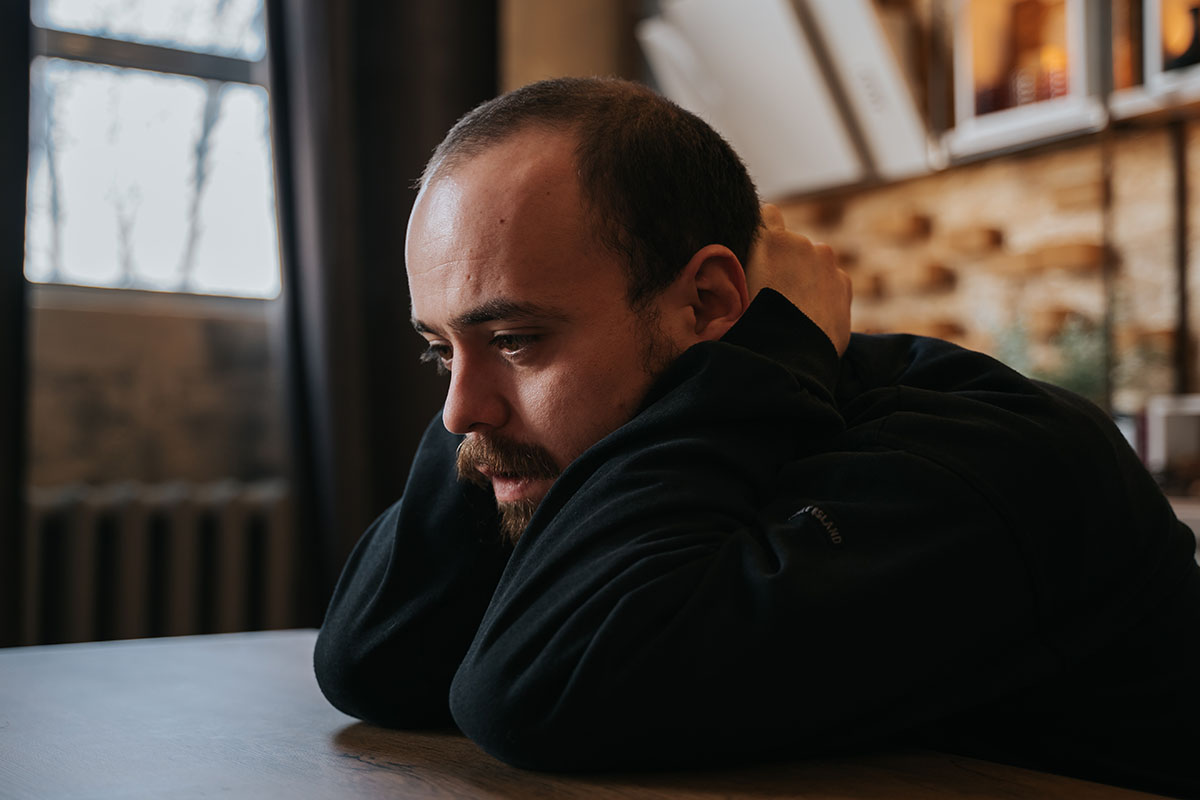
Men and Grief: Why Men Grieve Differently, and How to Cope Without Bottling It Up
“I’m fine.”
If you’ve ever said those two words while quietly falling apart inside, this article is for you. And if you’ve ever heard them from a man you love (a husband, a dad, a brother, a son, a friend) and known with absolute certainty that they weren’t true, it’s for you too.
Men grieve. Men grieve deeply, sometimes devastatingly. But so often, men grieve in silence, behind a closed door, in the car on the way to work, at 3am when nobody’s watching. And because that grief doesn’t look the way we’ve been taught grief is supposed to look, it gets missed. By the people around them. By support services. And frequently by the men themselves.
I’m Lucy Cole, founder of Love Life Coaching & Events in Sutton Coldfield and an award-winning grief coach. I’ve supported many men through loss, and I’ve watched the same pattern play out again and again: a man who is clearly, painfully grieving, who has told everyone (and himself) that he’s coping. He’s just busy. He’s just tired. He’s just getting on with it.
He is not fine. And the cost of pretending otherwise can be enormous.

Do Men Really Grieve Differently?
Yes and no, and the “no” matters just as much as the “yes.”
Grief itself doesn’t have a gender. The pain of losing someone you love is every bit as real, as deep and as disorienting for a man as for a woman. What tends to differ is not whether men grieve, but how that grief is expressed, and, crucially, how it’s received by the world around them.
Grief researchers Kenneth Doka and Terry Martin describe two broad styles of grieving. Intuitive grievers experience and express grief primarily through feeling: crying, talking, seeking out others, needing to share what’s happening inside. Instrumental grievers experience grief more through thinking and doing: they process loss by taking action, solving problems, staying physically busy, and working things through privately in their own head.
Neither style is better. Neither is healthier. And, importantly, these styles aren’t strictly divided by sex. Plenty of women are instrumental grievers and plenty of men are intuitive ones. But on average, men lean instrumental. And that has consequences.
Because our culture has quietly decided that “real” grief looks intuitive (tears, talking, visible sadness) the man who grieves by throwing himself into sorting the estate, fixing the fence, going back to work early or going quiet is often read as not grieving at all. He’s “coping so well.” He’s “being strong for the family.” Or, more harshly, he’s “cold,” “in denial,” or “emotionally unavailable.”
Meanwhile, inside, he’s drowning.
Why So Many Men Bottle It Up
The instrumental style is only half the story. Layered on top of it is something much more damaging: the lifelong message that men shouldn’t show pain.
Most men were taught this early and taught it thoroughly. Boys don’t cry. Man up. Don’t be soft. Be strong for your mum. By the time a man reaches adulthood, the idea that vulnerability is weakness has usually been absorbed so deeply that it no longer feels like a belief. It just feels like reality.
So when grief arrives, men often find themselves caught in an impossible bind:
- They feel they must be the strong one. Especially if there’s a partner, children or parents also grieving. Somebody has to hold it together, and a lifetime of conditioning says it should be him.
- They don’t have the language. Many men were never taught to name what they feel, let alone say it out loud. Ask “how are you?” and “fine” isn’t evasion. Sometimes it’s genuinely the only word available.
- They’re afraid of losing control. A common fear I hear is: if I start, I won’t be able to stop. So the door stays shut, because opening it feels dangerous.
- They believe nobody wants to hear it. Men frequently tell me they don’t want to “burden” anyone, or that their grief would make others uncomfortable.
- Support services aren’t built for them. Cruse Bereavement Support, the UK’s biggest bereavement charity, has openly acknowledged that men are far less likely to reach out for help, and has set up a dedicated “Men in Grief” project to try to understand why. Talking-based, group-based, feelings-first support simply doesn’t appeal to many men, so they don’t go.
Put all of that together and you get the quiet epidemic that I see in my work: men carrying enormous, unprocessed grief alone, sometimes for years, while everyone around them thinks they’re okay.
What Bottled-Up Grief Actually Does to a Man
Here’s the thing about grief that men need to hear plainly: it doesn’t go away because you don’t look at it.
Suppressed grief doesn’t dissolve. It goes underground. And from underground, it finds other ways out. Almost none of them good.
Anger and irritability. Anger is one of the few emotions many men have permission to feel, so grief frequently comes out sideways as a short fuse, snapping at the kids, road rage, a simmering resentment that doesn’t seem to have a cause.
Overwork and relentless busyness. Staying frantically occupied is one of the most common male coping strategies, and one of the most socially rewarded. But it’s often avoidance dressed up as productivity.
Drinking, and other ways of numbing. Alcohol, gambling, risk-taking, endless screens, anything that turns the volume down. I understand this one from the inside, because I numbed my own grief for years with all the wrong things, and it very nearly broke me.
Withdrawal. Pulling away from partners, friends and family. Going quiet. Disappearing into the shed, the gym or the office.
The body takes the strain. Grief that isn’t processed lives in the body as exhaustion, insomnia, chest tightness, headaches, a weakened immune system and more. I’ve written about the physical symptoms of grief because so many people, men especially, are never warned.
Grief that gets stuck. Months or years on, grief that was never allowed to move can become complicated grief. Frozen, unshifting and overwhelming. Men are at particular risk precisely because they so often delay dealing with it.
And there’s a hard truth underneath all of this. Men’s mental health outcomes after bereavement are worse than women’s in almost every measure that’s been studied, and unexpressed grief is a large part of why.
You don’t have to do this the hard way
If any of this sounds like you (or like a man you love) please know there’s a different route through. Supporting men to process grief in a way that actually fits them, without the pressure to “open up” on someone else’s terms, is a big part of what I do.
See how grief coaching works →
A Word From Someone Who Grieved “Like a Man”
I want to say something that might surprise you, given that I’m a woman writing about men’s grief.
When I lost my mum, and then my stepfather just weeks later, I didn’t grieve the way I “should” have. I didn’t fall apart. I didn’t talk. I got busy. I kept working, kept moving, kept everything running, and I buried what I felt so deep that for years I honestly thought I’d dealt with it.
I hadn’t. I’d just postponed it, and it came for me later, in the form of depression, anxiety, exhaustion and illness. It was only when I finally stopped running and let myself feel it that anything began to heal.
I share this because I know, personally, that the instrumental way of grieving isn’t wrong. But I also know that “getting on with it” without ever letting the grief move is a debt that always, eventually, comes due. The work I do now was born from paying that debt myself. It’s why my favourite saying is “you’ve got to feel it to heal it”, and I promise you, that applies to men just as much as anyone.
How to Cope With Grief Without Bottling It Up
None of what follows requires you to become someone you’re not. You don’t have to sob in a circle of strangers. You don’t have to talk about your feelings for hours. These are ways of letting grief move that work with how many men are wired, not against it.
Understand that your way of grieving is valid
If you process loss by doing rather than talking, that’s a legitimate style, not a failure. Building the memorial bench, running the marathon in their name, sorting the paperwork, fixing things. These can be real acts of grieving. The question isn’t whether you’re doing it “right.” It’s whether the grief is actually moving, or whether the doing has become a way of never looking at it.
Grieve through action on purpose
Instrumental grievers often heal best through purposeful activity. So aim it. Walk. Build. Run. Make something in their memory. Physical, hands-on activity discharges the stress grief loads into the body, and gives feelings somewhere to go that doesn’t require words.
Find one person, not a crowd
You don’t need to open up to everyone. Most men do far better with one trusted person (a brother, a mate, a partner) with whom they can drop the “I’m fine” occasionally. Shoulder to shoulder often works better than face to face: talking while driving, walking, fishing, working on something. It takes the intensity out.
Let the body do some of the talking
If words are hard, start with the body. Slow breathing (long exhales especially) calms a nervous system stuck on high alert. Exercise moves grief through. Even just noticing where the grief sits physically (chest, throat, gut) is a start. This is central to how I work, because for many men the body is a far more accessible route in than the emotions.
Watch the numbing
Be honest with yourself about the drinking, the overwork, the endless scrolling. There’s no shame in it, it’s what most of us reach for. But numbing doesn’t process grief; it just presses pause, and the bill gets bigger. If you notice the “off switch” has become a habit, that’s the signal to get some support.
Drop the “strong for everyone” act a little
Being strong for your family doesn’t mean being a wall. Letting your kids see you sad, letting your partner see you struggle, doesn’t frighten them, it shows them grief is survivable and that they don’t have to hide theirs either. The strongest thing you can model is that even the strong one is allowed to hurt.
Get support that fits you
There’s a version of grief support that many men imagine, and dread. That’s not the only version. Coaching is practical, forward-looking and built around you. What you want to get back to, how you want to function, what’s actually getting in the way. No sitting in a circle. No being made to cry. Just straight, compassionate work with someone who understands grief deeply. If that sounds more like your language, this is what grief coaching involves. And if you’re finding grief impossible to hold at work, I’ve written about grief and trauma in the workplace too.
If You Love a Man Who Is Grieving
Many people reading this aren’t grieving men, they’re the partners, mums, sisters and friends watching a man they love disappear behind “I’m fine.” Here’s what genuinely helps.
Stop measuring his grief by yours. If you grieve by talking and crying and he grieves by going quiet and fixing things, he is not grieving less than you. He’s grieving differently. Judging his style as coldness or denial will push him further away.
Do things together rather than sitting him down. “We need to talk about your feelings” makes most men bolt. A walk, a drive, a job to do side by side creates the space where things get said naturally.
Ask specific questions, not “how are you?” “How are you?” gets “fine.” “What’s been the hardest part this week?” or “Do you think about him at work?” gives him something concrete to answer.
Don’t rush to fix or reassure. If he does open up, resist the urge to make it better. Just let him say it. “That sounds really hard” goes a long way.
Notice the sideways signs. Anger, drinking, withdrawal, overwork. Read these as grief, not as him being difficult, and respond with concern rather than criticism.
Give him permission. Sometimes the most powerful thing you can say is simply: “You’re allowed to be devastated. You don’t have to be strong for me.”
Suggest support gently, and frame it his way. Not “you need counselling,” but “there’s someone who works with this in a practical way, would you talk to them once?” For a man who’d never go near a support group, a single no-pressure conversation can be the door in. If you’d like to understand more, my article on how to support someone who is grieving goes deeper.
When to Reach Out
Please consider getting support (for yourself, or for the man you’re worried about) if grief is showing up as:
- Anger or irritability that’s damaging relationships
- Drinking or other numbing that’s become a daily habit
- Complete withdrawal from family, friends and normal life
- An inability to function at work or at home months on
- Physical symptoms that aren’t easing
- A sense of being completely stuck, unable to move forward at all
- Thoughts of not wanting to be here
And if it’s that last one, please speak to your GP or a support service today. There is no version of “being strong” that means carrying that alone.
Frequently Asked Questions
Do men grieve differently to women? The pain of loss is the same, but men on average express grief differently, more through action, thinking and private processing (an “instrumental” style) than through talking and visible emotion. These styles aren’t strictly tied to gender, but the tendency, combined with cultural pressure on men to hide pain, means male grief often goes unrecognised.
Why won’t my husband talk about his grief? Very often it’s not that he doesn’t feel it, it’s that he processes it differently, fears losing control if he starts, doesn’t have the words, or feels he must stay strong for you. Side-by-side activity, specific questions and simply giving him permission to be devastated usually work far better than asking him to “open up.”
Is it unhealthy for a man to grieve by staying busy? Not necessarily. Grieving through action is a valid style. It becomes a problem when busyness is used to avoid the grief entirely, so that it never moves and eventually surfaces as anger, illness, anxiety or numbing behaviours. The test is whether the grief is being processed or simply postponed.
Is anger a normal part of grief for men? Very much so. Anger is one of the few emotions many men feel permitted to express, so grief frequently comes out as irritability or a short fuse. Recognising anger as grief in disguise (rather than as a character flaw) is an important step.
What kind of grief support works best for men? Many men are put off by talking-based or group-based support. Practical, forward-focused, one-to-one approaches (like grief coaching) that respect how a man is wired, and don’t require him to perform emotion, tend to work far better.
How can I support a grieving man without pushing him away? Don’t judge his grieving style against your own; do things alongside him rather than sitting him down; ask specific questions rather than “how are you?”; read anger and withdrawal as grief; and suggest support gently, framed in practical terms.
You’re allowed to be devastated
Whether you’re a man carrying grief behind a closed door, or someone who loves one, please know that “I’m fine” doesn’t have to be the whole story.
I’m Lucy, an award-winning grief coach in Sutton Coldfield, and I work with men in a practical, straightforward way that fits how they actually grieve. In a free, no-pressure consultation we can talk through where you are and what might help, no circles, no tissues required.
Or call me on 0800 998 7710 or email lucy@lovelifecoaching-events.co.uk. I work with people across Sutton Coldfield, Birmingham and the West Midlands, with online sessions available UK-wide.
Remember, you’ve got to feel it to heal it.
Love & Light, Lucy x
About the Author
Lucy Cole is the founder of Love Life Coaching & Events and an award-winning Grief Coach (Prestige Awards 2024/25 — Central England), based in Sutton Coldfield, Birmingham.
A Grief Recovery Specialist, Master NLP & Hypnotherapy Practitioner, CBT Practitioner and Trauma-Informed Coach, Lucy works with men and women alike, using practical, body-aware and trauma-informed approaches that meet people where they are rather than forcing grief into one shape. She has walked her own road through profound loss and knows first-hand the cost of bottling grief up. She is the author of How to Heal & Love Life Again.
You’ve got to feel it to heal it.





No responses yet